
The money stays in video, but the screen changes
According to Publicis Groupe Polska, in the first half of 2026 advertising spend in Poland came to almost PLN 7.1 billion, up 5.6% on the year before. The fastest growth came from cinema, which reached about PLN 110.8 million and grew by 21%, and from online video. Linear TV lost ground. Video as a whole still holds more than half of the market, exactly 50.6%. The share of digital media rose from 23.7% to 28.3%.
For a marketer, the most important thing is what these numbers don't show: a move away from film. Video advertising still works. People just watch it somewhere else. The same person can see a brand on the big screen before a film, and an hour later on their phone, between two short videos. The conditions couldn't be more different. In the cinema they sit in the dark and watch. On the phone they scroll, and decide in a fraction of a second whether to stay.
Which brings us to our thesis, one not everyone in the industry will agree with. A video campaign shouldn't start with a single spot that gets trimmed later. It should start with one story, designed from the beginning in several versions.
Why cutting down a finished spot is the most expensive saving
The most common scenario goes like this. A brand commissions a spot for a product launch. Everyone focuses on the main version: the shots, the music, the payoff at the end. When the film is ready, someone remembers that short versions for social are still needed, plus a vertical format and material for in-store screens. That's when the cutting starts.
A spot built on a slow reveal and a payoff in the last seconds doesn't survive shortening well. Cut the intro and the tension disappears. Cut the ending and the product disappears. In a vertical frame, a wide shot leaves you with the middle, which often contains neither the hero nor the pack. You end up with one of two outcomes: the short versions are weak, or they have to be reshot and reworked. Either way it costs time and money nobody planned for.
This is the argument to bring to the board. Planning the versions at the start doesn't increase the budget. It protects you from paying twice for the same story.
Cinema and phone in one script
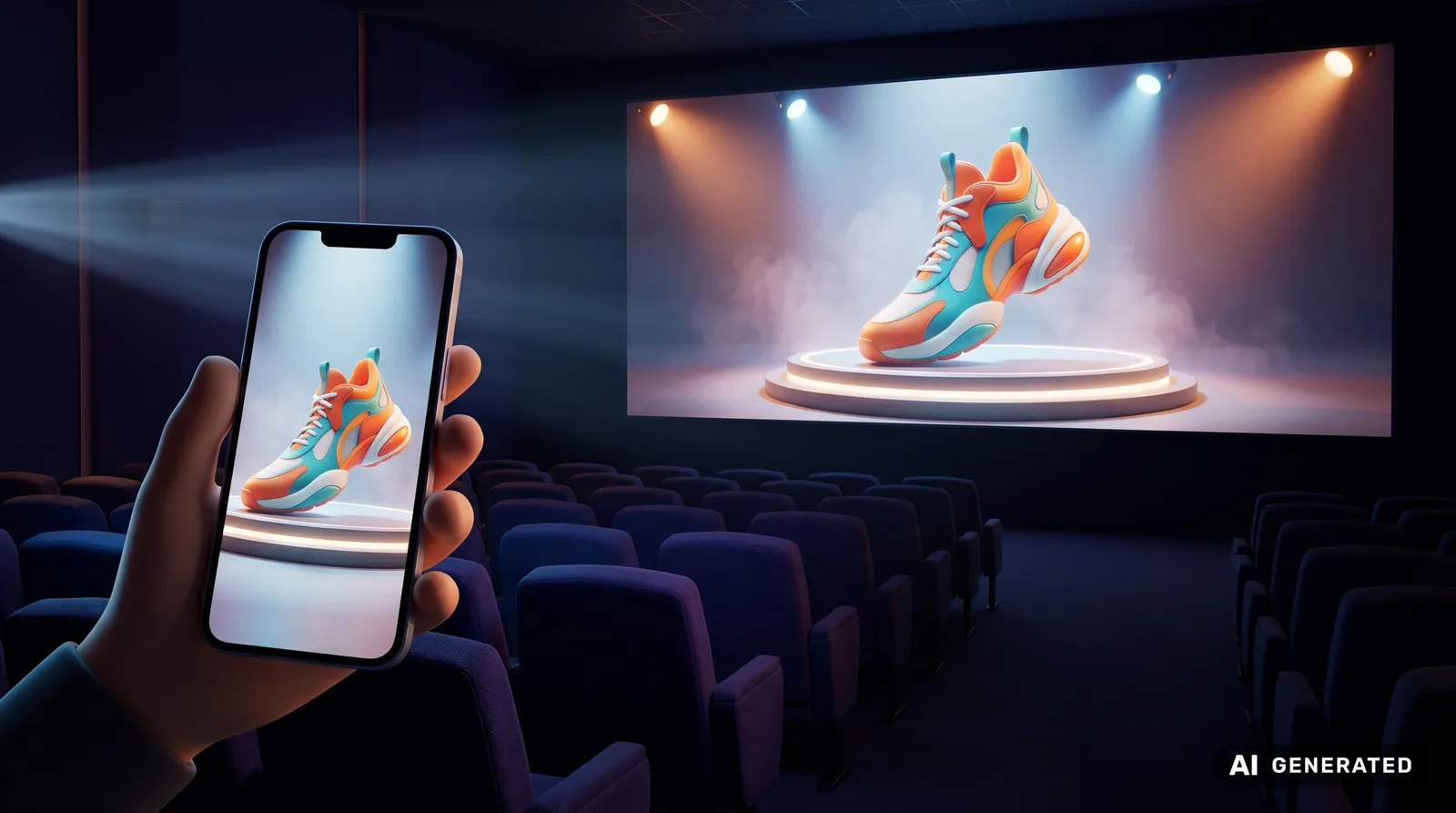
The growth of cinema is good news for brands that have something to show. The big screen forgives less than a phone. Every weaker shot, simplified graphic or unpolished product look is instantly visible there. So the cinema version, or a high-quality 16:9 version, can't be an enlarged copy of the online material. It has to be made with that screen in mind.
The same story also has to work where the viewer has only a moment and often the sound off. That's why, when writing the script, we look for a few moments that carry meaning on their own. One image says what the product is. One scene shows the benefit. One ending with the brand works equally well after a minute or after a few seconds. From such elements you can assemble the main version, the short online formats and the big-screen version. None of them then looks like leftovers from another.
This is where animation and 3D have an advantage worth knowing about. In live action, the frame is set once, on the film set. An animated or 3D scene can be rearranged for a different format. The product can be moved to the centre of a vertical frame, a detail brought closer for a small screen, the shot widened for cinema. If a brand is thinking about many versions, it's worth discussing this before choosing the technique, not after.
What to check before you send the brief
First, write down where the film will appear and what role it has to play there. A spot meant to build emotion in the cinema does something different from a short form meant to stop the scroll. The version on the product page has yet another job. This list should go to the studio together with the campaign goal, because it changes how the script is written.
Also ask to see not only the main version at the concept stage, but the shortest one too. If the idea doesn't hold up in a few seconds, it's better to know before production. This simple test saves a lot of stress before launch, when there's no time left for fixes.
Finally, treat all the versions as one project, not several separate commissions: one story, a consistent look and the same brand on every screen. Budgets move between screens, but the viewer should remember one thing: your product.